
 admin
admin
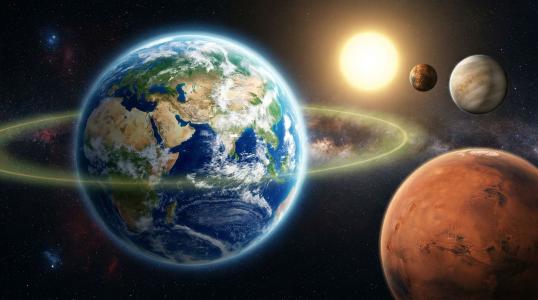
Why Earth Alone Hosts Life: The Fascinating Science Behind Our Habitable Planet
Look up at the night sky and you will see countless stars, each potentially circled by its own family of planets. Yet among the thousands of exoplanets confirmed so far, not one has been shown to host cities of humans, forests of green, or oceans teeming with fish. The blunt question "kenapa hanya planet bumi yang dapat di tinggali manusia/makluk hidup?" translates to the ultimate cosmic puzzle: why is Earth the only place we know that cradles life? In this long but friendly read we will unpack the precise conditions that turn a random rock into a living paradise, bust a few myths, and show you how astronomers hunt for life-supporting planets beyond our solar system.
The Goldilocks Zone: Not Too Hot, Not Too Cold
Astronomers love fairy tales, at least when naming things. The Goldilocks zone—more formally the habitable zone—is the ring-shaped region around a star where temperatures are "just right" for liquid water to pool on a planet's surface. Earth orbits the Sun at an average distance of 149.6 million kilometres, receiving about 1,361 watts of solar power per square metre at the top of the atmosphere. Move our planet 5 % closer and the oceans would start to evaporate faster, thickening the atmosphere with water vapour, a potent greenhouse gas that would drive temperatures even higher. Shift Earth 5 % farther out and carbon dioxide clouds could form, reflecting sunlight and triggering a global deep freeze. The width of the Sun's Goldilocks zone is narrow, maybe 0.2 AU at best, and Earth sits comfortably in the middle like a golfer sinking a putt.
Other stars change the rules. A red dwarf, the most common stellar type, is cooler and dimmer, so its habitable zone hugs the star at distances closer than Mercury's orbit. Unfortunately, planets that close risk becoming tidally locked—one hemisphere forever facing the star, the other in eternal night—creating extreme climate contrasts. Giant blue stars are hotter but burn out in a few hundred million years, barely enough time for microscopic life to get started, let alone complex creatures. Our Sun is a middle-aged G-type star, stable for billions of years, giving evolution a generous timeline.
Liquid Water: The Universal Solvent
Life as we know it is basically a sophisticated plumbing system. Cells transport nutrients, remove waste, and regulate temperature using liquid water. Its polar molecules dissolve salts, sugars, amino acids, and gases, allowing intricate biochemistry at mild temperatures. No other solvent matches water's versatility: ammonia freezes at –78 °C, methane at –182 °C, and sulfuric acid is, well, sulfuric acid. Earth's surface is 71 % water, and the planet's interior may store another ocean's worth in minerals. Plate tectonics recycles this water through volcanoes and mid-ocean ridges, keeping the hydrological engine humming.
Compare that to Venus, similar in size and composition but bone-dry. Ultraviolet light split any water vapour in the upper atmosphere, and the lightweight hydrogen escaped to space. Without water, Venusian plate tectonics stalled, carbon dioxide built up, and the planet cooked itself into a 462 °C furnace. Mars once had rivers and lakes, but its small mass meant weaker gravity and a cooling core; the magnetic field collapsed, the atmosphere eroded, and water either froze underground or sublimated away. Earth alone kept the tap running.
A Protective Magnetic Field: The Invisible Shield
High above your head, the magnetic field generated in Earth's liquid outer core deflects charged particles from the Sun. These particles, mostly protons and electrons, stream outward as the solar wind at speeds up to 900 km/s. Without the magnetosphere, this wind would gradually strip away the atmosphere, just as it did on Mars. The aurora borealis and australis are beautiful side effects: oxygen and nitrogen atoms glow when hit by particles funnelled along magnetic field lines toward the poles.
Creating a global magnetic field requires three ingredients: a conducting fluid, convection, and rotation. Earth's iron-nickel core stays liquid thanks to leftover heat from formation and radioactive decay. The planet's rapid 24-hour spin sets up spiralling convection cells that act like a self-sustaining dynamo. Smaller planets cool faster; larger rocky planets might rotate too slowly if tidally locked. The result is a narrow sweet spot where the shield persists for billions of years.
The Right Atmosphere: A Thin Blue Line
Take a deep breath. About 78 % nitrogen, 21 % oxygen, 0.9 % argon, and trace gases including 0.04 % carbon dioxide—this blend is Earth's atmosphere. Nitrogen buffers combustion; oxygen fuels metabolism; CO₂ keeps the greenhouse effect moderate. Too little greenhouse gas and Earth would be an iceball; too much and we would be Venus. The mix is maintained by life itself: photosynthetic plants pump out oxygen, while respiration and rock weathering balance carbon levels. It's a planetary thermostat set to 15 °C average.
Getting the atmosphere in the first place is tricky. Planets form from dust grains that stick together, snowballing into rock cores. Gravity pulls in surrounding hydrogen and helium, but if the core is too small, these light gases escape. Earth lucked out by forming within the Sun's snow line, where volatile compounds like water, ammonia, and methane froze into ice grains that could be incorporated into the growing planet. Later, volcanic outgassing and comet impacts delivered extra volatiles, building a secondary atmosphere heavy enough to stay put but light enough to avoid becoming a gas giant.
Plate Tectonics: The Planet's Recycling Program
Earth's crust is broken into seven major and dozens of minor tectonic plates that drift like colossal jigsaw pieces. Where they diverge, new crust forms from upwelling magma; where they collide, one plate dives beneath another, recycling carbon and nutrients back into the mantle. This process regulates climate by removing CO₂ from the atmosphere: rainwater reacts with fresh volcanic rock, forming carbonates that eventually get subducted. It also concentrates metals—copper, gold, rare earths—into ore deposits that human civilisation depends on.
Plate tectonics requires a thin, brittle crust floating atop a deformable mantle, lubricated by water. Venus, lacking water, has a stagnant lid that periodically overturns in catastrophic global resurfacing events. Mars has a single, thick lithospheric shell. Only Earth runs the continuous conveyor belt that stabilises temperature and creates diverse habitats from ocean trenches to mountain peaks.
A Large Moon: The Celestial Stabiliser
Next time you admire the full Moon, thank it for keeping Earth's axial tilt relatively steady. Gravitational tugs from the Moon dampen wobbles that would otherwise be induced by Jupiter and Venus. Without this lunar anchor, Earth's tilt could swing chaotically from 0 ° to 85 ° over millions of years, causing extreme climate shifts that would challenge complex life. Mars, with its two tiny moons, wobbles by tens of degrees, driving cycles of ice ages and thaw that may have disrupted long-term evolution.
The leading theory for the Moon's origin is the giant impact: a Mars-sized body named Theia collided with the young Earth, ejecting debris that coalesced into the Moon. Such collisions are rare, and the precise angle and speed needed to form a large moon while leaving the planet intact are finicky. Too head-on and both bodies vaporise; too glancing and little debris remains. Earth threaded the cosmic needle.
Jupiter: The Cosmic Vacuum Cleaner
Further out, Jupiter's 318-Earth-mass bulk acts as a bouncer, deflecting or swallowing asteroids and comets that might otherwise bombard the inner solar system. The 1994 impact of Comet Shoemaker-Levy 9, which left Earth-sized scars in Jupiter's atmosphere, is a dramatic reminder of this protective role. Without Jupiter, some models suggest Earth would suffer impact events a thousand times more frequent, periodically resetting evolution back to square one. The giant planet's gravity also shaped the asteroid belt, preventing a single large body from forming and instead scattering rocky material that later delivered water and organics to Earth.
Common Challenges and How to Overcome Them
When scientists search for other habitable worlds, they face several hurdles:
- Distance: The nearest star system, Alpha Centauri, is 4.37 light-years away. Even our fastest probes would take tens of thousands of years to reach it. Solution: develop larger space telescopes like the upcoming Habitable Worlds Observatory, which will directly image Earth-sized planets and analyse their atmospheres for oxygen and water vapour.
- Data Noise: Star spots, instrument glitches, and interstellar dust can mimic planetary signals. Solution: observe stars across multiple wavelengths and use machine-learning algorithms trained on millions of synthetic light curves to filter artefacts.
- False Positives: A planet might sit in the habitable zone yet lack water or a magnetic field. Solution: combine transit depth (which gives radius), radial velocity (which gives mass), and atmospheric spectroscopy (which gives composition) to build a holistic habitability profile.
- Time: Evolution needs billions of years; we only have snapshots. Solution: study stars of different ages to create a timeline of planetary development, much like palaeontologists reconstruct Earth's history from rock layers.
Are We Really Alone? The Rare Earth Equation
Frank Drake's famous equation estimates the number of communicative civilisations in the Milky Way by multiplying factors such as star formation rate, fraction with planets, and likelihood of life. Peter Ward and Donald Brownlee's Rare Earth Hypothesis tweaks this by inserting additional filters: plate tectonics, a large moon, Jupiter-like neighbour, and long-lived stable star. Plugging conservative values into the Rare Earth equation yields a galaxy where Earth-like planets number in the mere hundreds, scattered among 400 billion stars. If true, the nearest neighbour could be thousands of light-years away—close in cosmic terms but far beyond current human reach.
What Alien Life Might Look Like
Even if Earth is rare, simple life could be common. Extremophiles on Earth thrive in 120 °C hydrothermal vents, in Antarctic lakes buried under 4 km of ice, and in rocks 2 km underground feeding on nothing but radioactively produced hydrogen. If microbes can survive those conditions, similar organisms might inhabit subsurface oceans of Jupiter's moon Europa or Saturn's Enceladus, where tidal heating keeps water liquid beneath icy shells. Such life would likely be microscopic and chemically slow by Earth standards, but biology, not size, defines life.
How to Join the Hunt: Citizen Science Projects
You don't need a PhD to help find the next Earth. Platforms like Planet Hunters invite volunteers to classify light curves from NASA's TESS mission. AI is powerful, but the human eye still excels at spotting subtle dips that algorithms miss. Participants have already co-authored papers announcing new multi-planet systems. If coding is more your style, join the Zooniverse project "Disk Detective," classifying images of dusty disks around young stars that could be forming planets. Every click contributes to answering why Earth stands out.
Practical Tips for Aspiring Astrobiologists
- Learn Python: data analysis in astronomy is 90 % programming. Start with free courses on NumPy, pandas, and matplotlib.
- Master statistics: Bayesian methods underpin habitability models. Textbooks like "Data Analysis: A Bayesian Tutorial" are beginner-friendly.
- Build a telescope: a 15 cm Dobsonian costs under USD 300 and lets you observe Jupiter's moons and Saturn's rings firsthand.
- Stay curious: follow preprint servers like arXiv.org for the latest exoplanet papers before they hit journals.
Conclusion: Cherish the Pale Blue Dot
From the perfect distance of the Goldilocks zone to the invisible bubble of the magnetic field, Earth ticks every box in the cosmic habitability checklist. The same processes that make our planet lush also make it fragile: add a little more carbon dioxide, strip away a bit of ozone, or cool the core too fast and the whole system unravels. Understanding why only Earth currently supports humans and living creatures is not just an academic exercise; it is a call to safeguard the rare combination of conditions that let us breathe, drink, dream, and explore. So tonight, step outside, glance at the Moon, feel the ground beneath your feet, and remember you are standing on what might be the galaxy's most precious real estate. Share this article, join a citizen-science project, reduce your carbon footprint, and become an ambassador for the only home we have—at least until we find another pale blue dot among the stars.
Popular Posts



Categories
Tags

Comments