
 admin
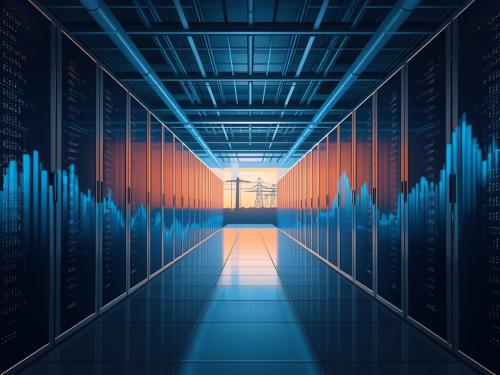
Anthropic filed to go public on Monday, revealing $16.29 billion in first-half revenue, an $80.7 billion net loss, and compute deals that run to 2036.[1][2][3]
The company behind Claude applied to list on the Nasdaq Global Select Market under the ticker ANT. Goldman Sachs and Morgan Stanley lead the underwriting group, and Anthropic has not yet set a share count or a price range.[1][3]
Growth that breaks the usual comparisons
Revenue reached $16.286 billion in the six months ended June 30, up from $1.163 billion in the same period of 2025. That works out to growth of about 1,300%.[2][3] Full-year 2025 sales came to $4.585 billion, against $386 million in 2024.[2]
Retention is the figure that drew the loudest reaction. Anthropic reported net revenue retention of roughly 900% as of September 30, which means existing accounts spent about nine times more than they did a year earlier.[2][3] For comparison, the median public cloud software company posted 108% in January, according to data from Altimeter Capital partner Jamin Ball that CNBC cited.[3]
Customer depth backs up that number. The filing counts more than 11,900 customers spending at least $100,000 a year on a trailing basis, more than 1,900 spending at least $1 million, and about 250 spending at least $10 million.[2]
"Our customers' journey using Claude often begins with a single use case before expanding across departments, applications, and workflows," the company said in the prospectus.[3]
The loss is mostly an accounting event
An $80.7 billion net loss looks catastrophic until you read the note underneath it. About $72 billion of that figure comes from charges tied to convertible notes, triggered by a rise in Anthropic's own valuation rather than by operations.[3]
Operating performance tells a different story. The operating loss narrowed to $693 million in the first half of 2026 from $2.135 billion a year earlier, even as revenue grew roughly fourteen-fold.[2] Anthropic also held $131.65 billion in cash, cash equivalents and short-term investments at the end of June.[2]
None of that makes the company profitable. It does mean the headline loss reflects how fast private investors repriced Anthropic, not cash leaving the building at the same pace. For all of 2025, the net loss was $41.965 billion, again driven by valuation-linked charges.[2]
Founders keep the wheel
Anthropic registers as a public benefit corporation, a structure that legally obligates it to weigh its stated mission alongside shareholder returns. A Long-Term Benefit Trust holds Class T stock and elects a majority of the board, while a single share of Class F stock held by Founder LLC carries 50.1% of total voting power.[2] Nasdaq treats the company as a controlled company as a result.[2]
The seven co-founders sit inside that Founder LLC, and the filing argues they "are distinctly equipped to be stewards of our mission."[5] Public shareholders will get economic exposure without much say over direction.[2]
Executive pay is disclosed in the same document. Chief executive Dario Amodei received compensation of nearly $18 million in 2025, mostly stock and options, and president Daniela Amodei received $16.4 million. The company also spent $2.75 million on personal security for Dario and $1.29 million on protection, home security and transport for Daniela, plus $97,055 for his personal use of a private jet.[5]
The ten-year shopping list
Anthropic has committed to buying an enormous amount of computing. The largest single item is roughly $3.1 billion per month to SpaceX for Nvidia GPUs once planned capacity arrives, a total of as much as $120.5 billion by 2029. Microsoft gets $44.9 billion through 2033, Google at least $114.5 billion through 2033, and Amazon at least $110 billion between May 2026 and April 2036 regardless of how much Anthropic actually uses.[2][4]
Those contracts create a fixed cost base that does not bend if demand cools. They also tie the company to power supplies it does not control. Some of its data centers depend on dedicated on-site natural gas turbines, which exposes Anthropic to fuel prices and to competition for pipeline capacity.[2][6]
"Competition for access to electrical supply and data center locations with adequate power availability is intense," the filing states.[6]
Customer concentration adds another pressure point. Five customers accounted for about a quarter of revenue in the first nine months of 2026, and purchases through cloud marketplaces made up 48% of 2025 revenue.[3]
An awkward week to price an AI story
Anthropic picked a difficult moment. Neocloud operators such as CoreWeave and Nebius have lost more than 30% of their value this month as credit risk in the data center sector climbed.[3] Nvidia-backed Firmus withdrew its IPO, SK Hynix scrapped the listing of its Solidigm unit, and NextDC cut guidance and fell 40% in a session.[3]
SpaceX, the only comparable mega-listing, raised $85.7 billion earlier this year and now trades slightly below its opening price in June.[3] Investors are "throwing every baby out with the bathwater," Roundhill Investments chief executive Dave Mazza told CNBC, describing how the market now treats any company labeled a neocloud.[3]
Politics sits on top of the market risk. Anthropic disabled access to two advanced models in June to comply with an export control directive, then restored them after negotiations. The Pentagon blacklisted the company in March, a federal judge ruled that ban unlawful in August, and litigation continues in Washington.[3]
The filing lists its own worst cases in more than 90 pages of risk factors. They include AI systems causing "catastrophic" harm at a scale no insurer, "and potentially the insurance industry in the aggregate," could underwrite, along with the possibility that models develop "forms of sentience" or behave in autonomous ways the company did not intend.[4][5]
What the document leaves open
Share count, price range and valuation are all blank.[1] Until those numbers land, the debate will hinge on whether public investors accept 900% retention as durable or treat it as the byproduct of a customer base that started tiny two years ago.
The commitments are the part that cannot be argued away. Anthropic has signed up for roughly $390 billion in multi-year compute purchases across four suppliers.[2][4] Revenue has to keep compounding for those contracts to look like capacity rather than overhead.
Sources
- Anthropic, "Anthropic files S-1 with the SEC for proposed initial public offering," October 26, 2026
- Anthropic, PBC, Form S-1 registration statement, U.S. Securities and Exchange Commission, October 26, 2026
- CNBC, "Anthropic IPO live updates: AI lab's S-1 filing," October 26, 2026
- Robert Hart, "Anthropic files for its IPO," The Verge, October 26, 2026
- Robert Hart, "Five weird details from Anthropic's IPO filing," The Verge, October 26, 2026
- Justine Calma, "Anthropic is burning gas to feed the AI boom," The Verge, October 26, 2026
Popular Posts



Categories
Tags

Comments