
 admin
admin
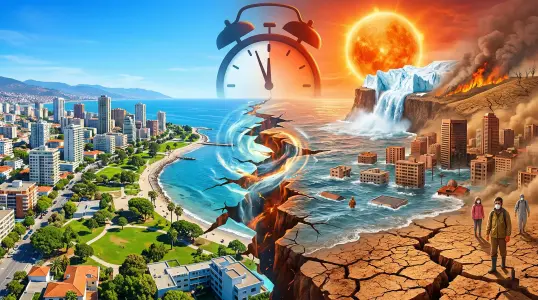
10 Shocking Climate Change Effects Transforming Earth by 2030
Climate change is no longer a distant threat whispered in scientific journals; it is a present, accelerating reality reshaping our planet. By 2030—a mere six years from now—the cumulative effects of decades of greenhouse gas emissions will manifest in profound and often shocking ways. The projections from the world's leading climate bodies, including the Intergovernmental Panel on Climate Change (IPCC), paint a picture of a world undergoing rapid environmental transformation. This article delves into ten of the most significant and alarming climate change effects that are set to redefine life on Earth by the end of this decade. Understanding these impacts is not about fostering fear, but about empowering ourselves with the knowledge to adapt, mitigate, and demand urgent action.
1. The Era of Uninsurable Homes and Cities
One of the most immediate economic shocks will be the collapse of the traditional insurance model in vast regions. As extreme weather events become more frequent and severe, the financial risk becomes too great for companies to bear. By 2030, we can expect large swaths of coastal properties, wildfire-prone zones in the American West and Mediterranean, and floodplain communities to become effectively uninsurable on the private market. This isn't a distant future scenario; it's already beginning in states like Florida and California. The domino effect is catastrophic: plummeting property values, mortgage markets in turmoil, and a massive burden shifting to governments and taxpayers. The very concept of where and how we build safe, financially viable communities will be fundamentally challenged.
2. The Collapse of Critical Ocean Currents
The Atlantic Meridional Overturning Circulation (AMOC) is the great conveyor belt of the ocean, responsible for distributing heat around the globe and giving Europe its relatively mild climate. Decades of melting Greenland ice sheets are pouring vast amounts of freshwater into the North Atlantic, diluting the salty, dense water that drives this current. Recent studies suggest the AMOC is at its weakest in over a millennium and is showing signs of approaching a tipping point. A significant slowdown or collapse by 2030 would trigger rapid and severe regional climate shifts: drastic cooling in Western Europe, even as the planet overall warms, intensified storms, and major disruptions to marine ecosystems that feed millions. This is a planetary-scale system showing signs of failure.
3. Permanent Alteration of Global Food Baskets
The "breadbaskets" of the world—the Midwestern United States, the Punjab region in India, the wheat fields of Ukraine—are under siege from a combination of heatwaves, droughts, and unpredictable precipitation. By 2030, the reliable growing seasons and climate patterns that modern agriculture depends on will have shifted. Some traditional regions will face chronic water scarcity and heat stress, reducing yields of staples like wheat, corn, and rice. Meanwhile, other areas, like parts of Canada and Siberia, may see longer growing seasons, but will face challenges with soil quality, infrastructure, and new pests. This geographic shift will destabilize global food supply chains, exacerbate geopolitical tensions over resources, and lead to increased volatility in food prices, hitting the poorest populations hardest.
4. The First Climate "Megadrought" in Modern History
While multi-year droughts have occurred throughout history, climate change is intensifying and locking them in for decades. The Southwestern United States and Northern Mexico are currently in what scientists classify as a "megadrought," the driest 22-year period in at least 1,200 years, and human-caused warming is a major driver. By 2030, this could solidify into a permanent aridification of the region. Reservoirs like Lake Mead and Lake Powell could reach "dead pool" status, where water no longer flows downstream from dams. This threatens the water security for tens of millions of people and a significant portion of the nation's winter produce. Similar long-term aridification is projected for the Mediterranean, parts of South America, and Southern Africa.
5. The Point of No Return for Coral Reefs
Coral reefs, the rainforests of the sea that support 25% of all marine life, are on the frontline of climate change. They are devastated by ocean warming (causing bleaching) and acidification (weakening their skeletons). Mass bleaching events, once rare, are now occurring almost annually in some regions. By 2030, under current emission trajectories, we will likely cross a threshold where frequent bleaching events prevent reefs from recovering. Large-scale functional collapse of coral reef ecosystems is a real possibility. The loss extends far beyond biodiversity; it threatens the livelihoods of half a billion people who depend on reefs for food, coastal protection from storms, and tourism income.
6. The Rise of "Zoonotic Pandemics" as a Climate Effect
The COVID-19 pandemic offered a grim preview of a future intimately linked to ecological disruption. Climate change is a major driver of zoonotic spillover—the jump of pathogens from animals to humans. As warming temperatures shift the geographic ranges of animals like mosquitoes, ticks, and bats, they bring diseases like malaria, dengue, and novel viruses into contact with new human populations. Deforestation, itself driven by agricultural expansion linked to climate adaptation, forces wildlife into closer contact with human settlements. By 2030, the public health community warns that the risk of novel disease outbreaks will be significantly elevated, creating a new layer of chronic global crisis intertwined with the climate emergency.
7. The Disappearance of Iconic Glaciers and Landscapes
The visual transformation of Earth's iconic landscapes will be stark and undeniable by 2030. Glaciers in the Alps, the Rockies, the Andes, and East Africa are retreating at an unprecedented pace. The "Snows of Kilimanjaro" will be largely gone. Glacier National Park in the U.S. may have to be renamed. This is not just an aesthetic loss. Glaciers act as vital freshwater reservoirs for billions of people, releasing meltwater steadily during dry seasons. Their loss leads to acute water shortages for major cities and agricultural regions. The cultural and spiritual loss for indigenous communities whose identities are tied to these ice formations is immeasurable.
8. The Intensification of "Compound Extreme Events"
The future of climate disasters lies in compounding and cascading events. It won't just be a heatwave; it will be a heatwave that triggers widespread power outages (as demand for AC surges), which then exacerbates a public health crisis, coinciding with a drought that limits hydroelectric power and water for cooling nuclear plants. Imagine a severe hurricane hitting a coast already weakened by sea-level rise, followed by torrential rains that cause inland flooding because the soil is baked hard from a prior drought. By 2030, these complex, multi-hazard events will stretch emergency response systems—designed for single disasters—beyond their breaking points, leading to higher mortality and economic losses.
9. The Acceleration of Sea Level Rise Beyond Predictions
Sea level rise is accelerating, not linear, due to the non-linear melting of ice sheets in Antarctica and Greenland. Earlier models may have been too conservative. By 2030, even the "moderate" projections suggest a noticeable and impactful increase. "Sunny day" or nuisance flooding in cities like Miami, Bangkok, and Jakarta will become a weekly or even daily occurrence, crippling infrastructure. Saltwater intrusion will permanently contaminate coastal aquifers, destroying agricultural land and freshwater supplies. The first waves of climate refugees from low-lying island nations and vulnerable coastal communities will become a more prominent global issue, as places become functionally uninhabitable.
10. The Irreversible Loss of Arctic Summer Sea Ice
The Arctic is warming at least three times faster than the global average. A landmark study suggests that the Arctic could see its first "ice-free" summer—defined as less than 1 million square kilometers of ice cover—as early as the 2030s, a decade earlier than previous estimates. This isn't just about polar bears. The white ice cap acts as a planetary reflector, bouncing solar energy back into space. As it disappears, it reveals dark ocean water that absorbs more heat, creating a powerful feedback loop that accelerates global warming (a process known as Arctic amplification). This will further disrupt Northern Hemisphere weather patterns, leading to more persistent and extreme weather events in mid-latitudes, including severe cold snaps and heatwaves.
Common Challenges and How to Overcome Them
Faced with this daunting list of climate change effects, individuals, communities, and governments often encounter significant psychological and practical barriers to action. Understanding these challenges is the first step to overcoming them.
Challenge 1: Eco-Anxiety and Paralysis
The scale of the problem can lead to feelings of helplessness, anxiety, and outright denial. This psychological overwhelm often results in inaction.
How to Overcome: Shift from a mindset of "saving the planet" to "building a better, more resilient community." Focus on tangible, local actions. Join a community garden, advocate for bike lanes in your town, or support local conservation groups. Action is the antidote to anxiety.
Challenge 2: The "Tragedy of the Horizon" in Economics
Politicians and businesses often operate on short-term electoral or quarterly profit cycles, while the worst climate impacts lie beyond this horizon, disincentivizing costly preventative action today.
How to Overcome: Demand and support policy frameworks that mandate long-term planning. This includes carbon pricing, mandatory climate risk disclosures for corporations, and infrastructure investments rated for 2050 conditions, not 1950s data. Vote for leaders with robust, science-based climate plans.
Challenge 3: Misinformation and Political Polarization
Despite overwhelming scientific consensus, misinformation campaigns have successfully framed climate action as a partisan cultural issue rather than a physical reality, blocking coherent policy.
How to Overcome: Focus on shared values and co-benefits. Frame climate action in terms of economic opportunity (green jobs), national security (energy independence), public health (cleaner air), and community resilience (less disaster damage). Have conversations rooted in local impacts, not abstract global temperatures.
Challenge 4: Systemic Inertia and Infrastructure Lock-in
Our economies are built on fossil fuels—from transportation to manufacturing. Shifting these massive systems feels slow and expensive.
How to Overcome: Support innovation and market signals. As individuals, choose renewable energy plans, electric vehicles, and energy-efficient appliances when possible. As citizens, support subsidies for clean tech and R&D. Every choice helps shift the market and demonstrates demand, accelerating the transition.
Challenge 5: Global Inequity and the Justice Dilemma
The nations and communities least responsible for emissions are often the most vulnerable to its effects, creating a profound moral and practical challenge for international cooperation.
How to Overcome: Advocate for and support climate finance mechanisms. Developed nations must meet and exceed commitments to fund adaptation and green development in the Global South. Support organizations working on climate justice and fair transition policies that protect vulnerable workers and communities.
The Path Forward: Mitigation and Adaptation
The 2030 horizon, while alarming, is not a fixed destiny. It is a projection based on current trajectories. Every fraction of a degree of warming avoided matters profoundly. Our path forward requires a two-pronged strategy:
Mitigation: This is the urgent work of slashing greenhouse gas emissions at source. It means a rapid, global transition to renewable energy, transforming agriculture, protecting forests, and developing new technologies like carbon capture. The goal is to limit the scale of the transformation described above.
Adaptation: Because some level of change is now locked in, we must simultaneously adapt our societies. This includes building seawalls and managed retreat from coastlines, developing drought-resistant crops, redesigning cities with green infrastructure to manage heat and flooding, and strengthening early warning systems for extreme weather.
The most effective actions combine both: planting mangroves (adaptation) that also sequester carbon (mitigation), or installing solar panels (mitigation) that provide resilient, decentralized power during grid outages (adaptation).
Conclusion
The ten shocking climate change effects projected for 2030 reveal a planet in the throes of a great and rapid transformation. From uninsurable homes and collapsing ocean currents to vanished glaciers and intensified compound disasters, the impacts are interconnected, cascading, and deeply consequential for human civilization. This knowledge, however heavy, is our most crucial tool. It strips away the illusion of a distant problem and clarifies the urgent need for action in this decisive decade. The difference between a 2030 defined by managed resilience and one defined by chaotic disruption will be determined by the choices we make today—as consumers, voters, community members, and global citizens. We have the technology and the knowledge. What we need now is the collective will to implement it at the speed and scale the science demands.
Call to Action: Don't let this information paralyze you—let it propel you. Start today. Calculate your carbon footprint and identify one area to reduce it this month. Contact your elected representatives and demand they support ambitious, science-based climate legislation. Discuss these realities with your friends, family, and colleagues to break the spiral of silence. The future that arrives in 2030 is being built now, with every action and every choice. Choose to be part of the solution.
Popular Posts



Categories
Tags

Comments